Chapter 2: Different Phases of Upstream Oil and the Roles of States
The Upstream Oil sector includes five (05) categories of activities or phases that follow one another (Figure 5): Pre-licence, Exploration, Development, Production and Abandonment.
Figure 5: Different phases of upstream oil
Authorization to operate
Exploration Authorization
- Pre-licensing phase
2.1.1- Definition of the concept
During this phase, the State puts in place the policy as well as the regulatory and technical tools necessary for oil exploration, promotion, allocation of oil blocks, management and monitoring of contracts/authorizations or licenses as well as environmental management related to the realization of oil exploration and exploitation activities.
The pre-bachelor’s degree stage addresses, among other things, aspects relating to:
-
preliminary geological and geophysical reconnaissance or prospecting studies (gravimetry, magnetometry, speculative seismic, etc.), the objective of which is to define the areas suitable for exploration and to assess their oil potential;
-
the establishment of laws and regulations that should clarify the main areas of concern for both the investor(s) and the host government. This will enable the host Government to ensure better monitoring and proper management of contracts and to effectively monitor revenue forecasts through the establishment of an appropriate and mutually beneficial tax and legal regime.
-
the delimitation of maritime and land borders as well as the mechanism for managing border conflicts in oil zones common to two or more States;
-
the management of the involvement of local communities and the expectations of the populations.
Once the areas potentially favourable to oil exploration have been known and the oil potential assessed, the technical and environmental laws and regulations and the tools for awarding and managing oil contracts have been developed, States can proceed to allocate perimeters for exploration.
The issuance of a petroleum licence or authorization follows the process outlined in Figure 4 below. It starts with promotional activities until a contract is signed and/or an authorization is issued that gives the IPCs the right to explore and exploit hydrocarbons in a well-defined area commonly known as an oil block.
- Strategy for awarding petroleum licences or authorizations
Promotion is the operation of attracting investors in oil exploration and exploitation. Countries with oil potential and wishing to embark on the development of their oil resources must prepare and/or regularly update petroleum promotion documents. A promotion file must contain the following documents:
-
Petroleum legislation
-
The contract model
-
The list and price of available oil data if required. Some countries make data available to oil companies free of charge to be more attractive
-
Information on the oil potential and/or a technical assessment report of the oil potential
-
Perimeters or blocks on promotion
-
Information on available oil infrastructure
-
The institutional framework of the hydrocarbon sector and contacts of the structures in charge of this sector
-
The Tender Calendar
-
Pre-qualification criteria
-
Evaluation criteria
The different stages of the allocation of oil blocks are (Figure 6):
-
Announcement of the exploration area or blocks on promotion
-
Launch of the call for tenders: the launch of a call for tenders makes it possible to have several offers on the same domain or block; this makes it possible to make comparisons in order to choose the most interesting offers for the State. However, it is not excluded that the State will decide to examine, on the basis of its expectations, the unsolicited offers of companies that show an interest in a given block.
-
The definition of the pre-qualification criteria: the pre-qualification constitutes a first filter of the oil companies on the basis of criteria previously defined by the States in order to identify the oil companies or consortium capable of playing a relevant role in the field where the blocks are auctioned; These criteria generally relate to the financial, technical, security and environmental management capacities of oil companies
-
Submission of tenders: this consists of the submission of applications by oil companies that are interested in oil exploration in the fields open to tendering
-
Analysis/evaluation of tenders: this is done on the basis of the award criteria developed by the Government.
-
Allocation of the block: this is done after negotiation of the technical and economic terms with the CPIs who present the best offers on the basis of the State’s expectations. The technical and fiscal terms that may be subject to negotiation and that condition the final allocation are:
-
Work obligations
-
Retrocession or surface rendering
-
Local Content and Training
-
Socio-community development
-
Signing and Exploitation Bonuses
-
Royalties
-
State participation,
-
The cost stop rate
-
The key to sharing oil profit, etc.
-
Oil negotiations require good preparation and professionalism on the part of the Government. It is carried out by a multidisciplinary team which must include, but is not limited to, players with a good knowledge of oil contracts and negotiation techniques as well as technicians experienced in the sector. This team can be made up of lawyers, oil economists, geoscientists, etc.
Figure 6: Process for Assigning Oil Block to the IPC for Petroleum Exploration and Development
All in all, pre-licensing activities are necessary because they condition the decision of governments whether or not to engage in oil exploration activities.
This was the beginning of investments in the hydrocarbon sector.
- Financing of pre-licensing phase investments
As a general rule, pre-licensing activities are under the sovereignty of the host state. The implementation of policy documents, legislation and regulations, as well as the assessment of oil potential and the implementation of tools and strategies to move to exploration via international oil companies are the responsibility of States and require relatively less expensive investments than those relating to exploration activities. States with financial resources and competences directly finance all these activities (Norway for example). However, those with limited financial resources and no required skills are accompanied for certain pre-licensing activities by service companies to carry out the first reconnaissance and evaluation studies of the oil potential in order to have first-hand information before engaging in promotional activities that lead to the signing of exploration and exploitation contracts with oil companies. These service companies usually acquire the data at their own expense on the basis of a service contract and market and market it to international oil companies.
- Importance of the pre-licensing phase and responsibilities of the State
The pre-licensing phase is very essential in the sense that the lack of knowledge of its oil potential and the non-existence from the outset of all the clear regulations, procedures and tools for the management of upstream oil activities are detrimental to the signing of fair and beneficial contracts for the State.
“You can never sell a packaged good at its fair value, i.e. very little or poorly known .”
The non-or poor preparation of the pre-licensing phase thus leads to harmful consequences for States during the execution of oil operations, where they are confronted with legal and contract management difficulties.
Unfortunately, most African countries neglect this phase and engage in the exploration and exploitation of oil resources without any necessary safeguards by signing contracts whose revenue sharing is often unfavorable or very unprofitable following the discoveries. The lack or inadequacy of proper preparation for the pre-licensing phase, which is essential for the implementation of tools for managing and monitoring contracts before engaging in oil activities (which contributes to the development of resources), is often one of the fundamental causes of the signing of “one-sided contracts” with foreign partners in the geo-extractive sector in general and in the oil industry in particular in Africa.
- Exploration phase
2.2.1- Exploration methods and strategies
Exploration is the phase of upstream oil activities that consists of the search for hydrocarbons in the subsoil using geological and geophysical methods, including seismic methods, and the drilling of exploratory wells. Initially, the research consisted of drilling near natural surface showings; This only made it possible to discover small deposits, close to the surface.
Today, it is undertaken by the International Oil Companies (IPC) which have developed several exploration methods and technologies from the simplest to the most sophisticated for the discovery of hydrocarbons at great depths both on land and in very deep seas (beyond 3 km of bathymetry).
The activities concerned by the exploration are, among others:
-
Surface geological research
-
Gravimetry,
-
Magnetometry
-
Aerial photography
-
Seismic
-
Electromagnetism (EM) or Control Source Electro-Magnetic (CSEM)
-
Exploration drilling
Gravimetry and magnetometry help to identify areas of geophysical anomalies where other, more precise methods can be applied to locate hydrocarbons. They make it possible to determine the nature and depth of the sedimentary layers and thus give an idea of the distribution and thickness of the sedimentary formations (Figure 7 a and b).
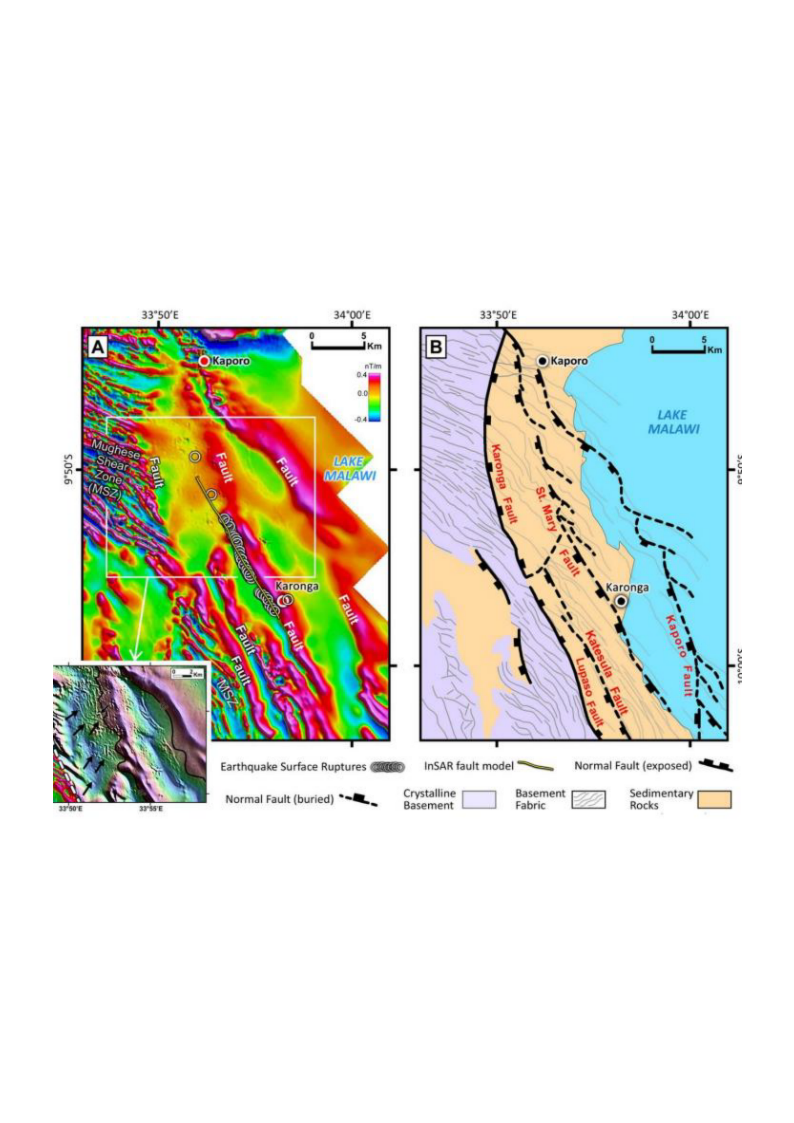
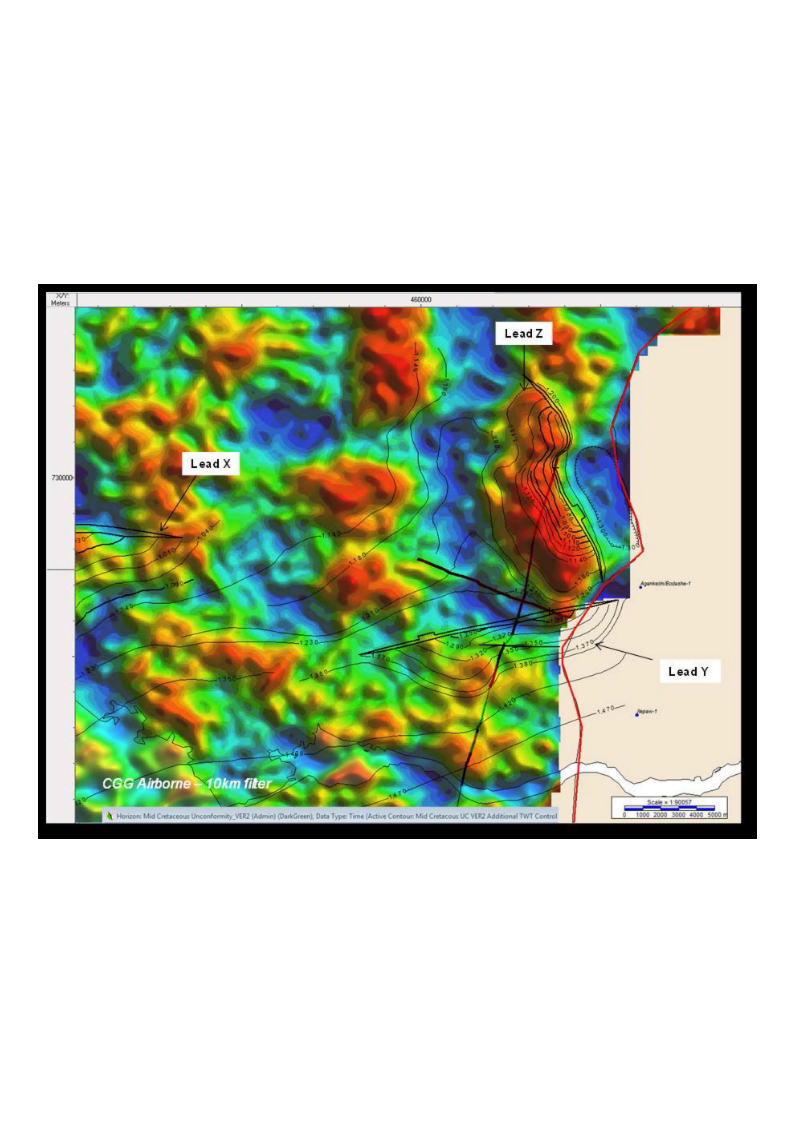
Figure 7: Gravimetric acquisition (a) showing anomalies in the Coastal Sedimentary Basin of Benin (CGG 2013) and aeromagnetic (b) to characterize the basement and sedimentary formations
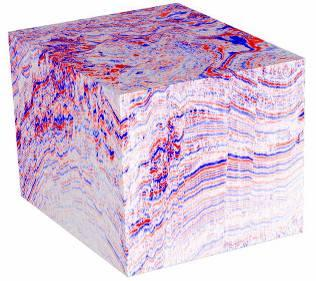
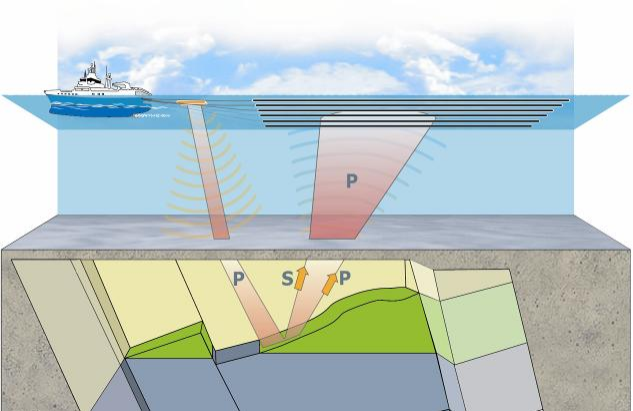
Seismic reflection, the most commonly used method before exploratory drilling. The principle of seismic acquisition consists of sending sound waves into the ground that are reflected by the different rock surfaces. The time taken by the waves to come to the surface and to be recorded by geophones (when the operation takes place on land) or hydrophones (when the operation takes place at sea) indicates the depth of the rocks crossed (Figure 8a, b). Seismics can be carried out in two 2D dimensions and for more than half a century in three 3D and even four 4D dimensions. Seismic also provides information on the nature of the rocks from the analysis of the different transmission speeds noted at the level of the different types of rocks. The analysis and interpretation of seismic data also allows the identification of hydrocarbon traps and Direct Hydrocarbon Indicators (HIDs) such as Bright Spots, Flat Spots and Gas chimneys etc. which condition the positioning of exploration wells (Figure 9).
b
a
Multiple qv streamers
Source
Figure 8: 3D acquisition principle (a) and seismic cube (b)
Well Positioning
Exploratory
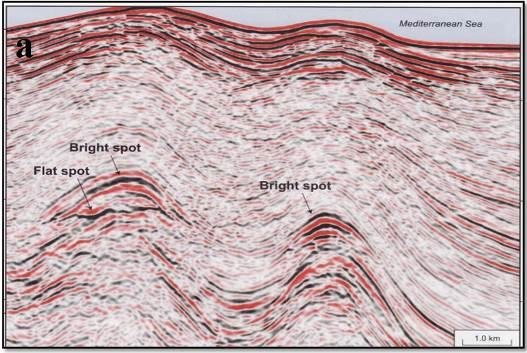
Figure 9: Seismic amplitude anomalies showing Brightspots and Flatspots
CSEM is a technology developed that measures resistivity contrast in the seabed. The acquisition of EM is generally done on the prospects/traps already identified by the seismic in order to have a precision on the nature of the fluid contained in the traps. Indeed, the areas of oil traps have a high resistivity while the rocks around the traps are conductive because they generally contain salt water (Figure 10). This technology makes it possible to determine whether or not there is a resistivity contrast in regions where traps have been mapped in order to maximize the chances of success of exploratory wells.
Positioning an exploratory well
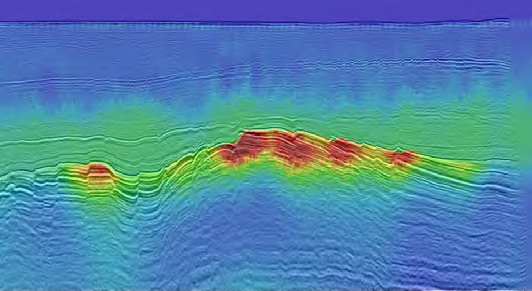
Figure 10: Electromagnetism coupled with seismic reflection showing the contrast of resistivity at the level of the traps highlighted by the seismic
Exploratory drilling is the ultimate and very expensive step in exploration that makes it possible to confirm or refute the predictions of exploration geologists and geophysicists.
The duration of an exploration license varies from 7 to 9 years in West African countries.
2.2.2- Techniques for evaluating a prospect
Oil exploration is based on four fundamental principles, namely: the search for the existence of a petroleum system in the licensed area by the various research methods mentioned above, the identification and mapping of geological structures likely to contain hydrocarbons (Plays, leads and prospects), the assessment of the geological risks associated with the mapped structures and finally the volumetric estimation of the potential for petroleum resources.
- Petroleum system
The petroleum system is the whole of source rocks, reservoir rocks, cover rocks and overload rocks as well as the entire process of trap formation, generation, migration, accumulation and preservation hydrocarbons (Figures 11 and 12). These essential geological factors and process must take place in time and space so that the organic matter contained in the source rock can turn into an accumulation of oil (Magoon & Dow, 1994).
It should be noted that this organic matter from which oil was formed, several million years ago, is the result of the decomposition, under the effect of sedimentary subsidence pressure and geothermal temperature, of microscopic animals and plants (phytoplankton and zooplankton) that lived in the sea.
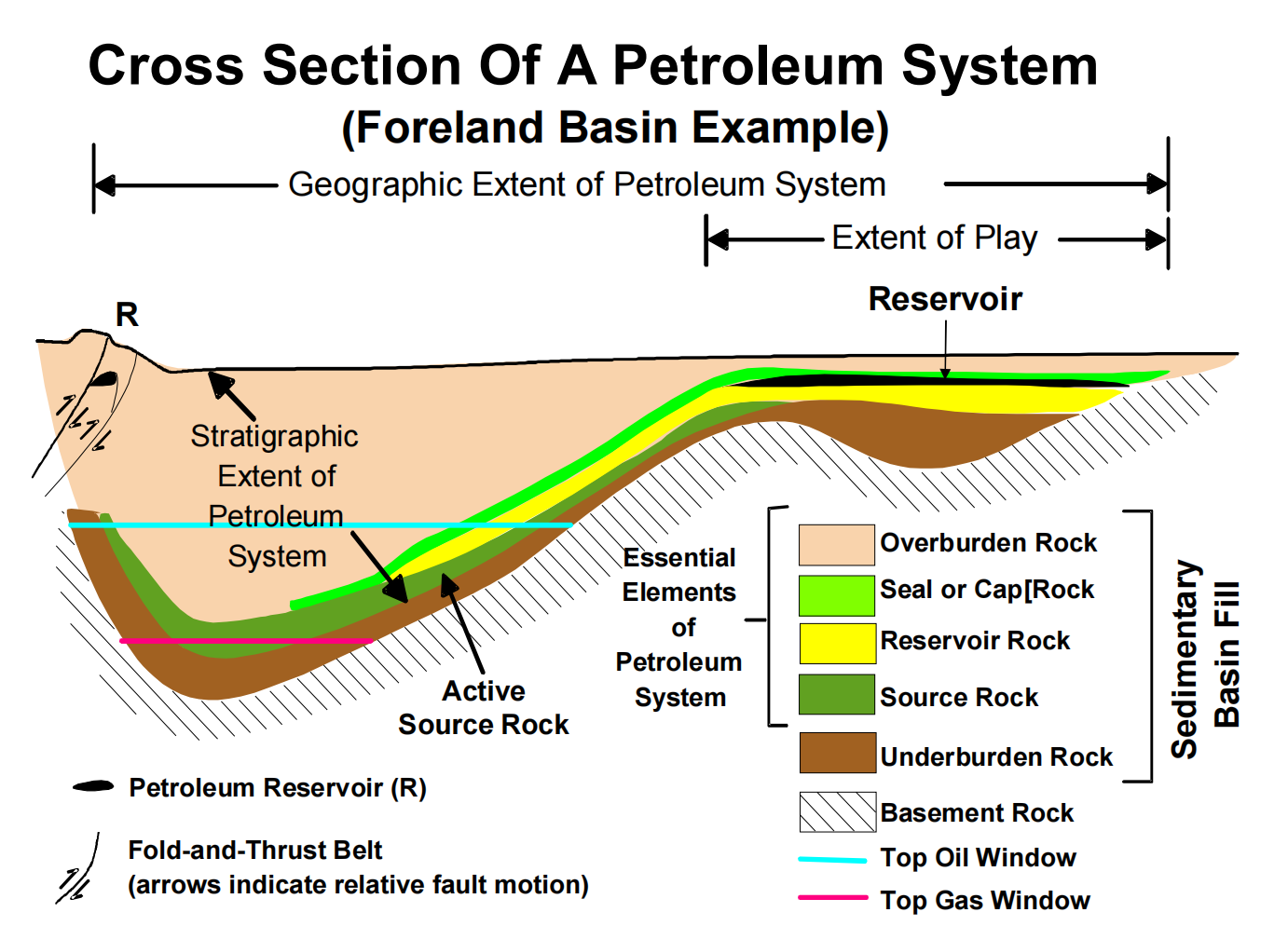
Figure 11: Geological section showing the stratigraphic extent of a fictitious petroleum system (Magoon and Dow, 1994, modified by Schlumberger)
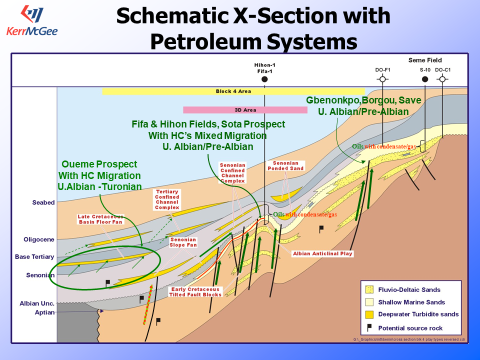
Figure 12: Geoseismic section showing petroleum systems in the Benin Coastal Sedimentary Basin, Kerr McGee, 2003
- Identification and mapping of geological traps likely to contain hydrocarbons
Geophysicists and geologists process and interpret the data acquired by the various research methods in order to identify hydrocarbon traps (Figure 13), HIDs or any other geological anomalies that make it possible to suspect the presence of hydrocarbons and that make it possible to guide the positioning of exploratory wells.
Hydrocarbon traps can be structural, stratigraphic or mixed depending on their formation mechanism.
Structural traps can be formed by regional tectonic mechanisms (fault, anticline, etc.) or by salt tectonics (halokinesis). Stratigraphic traps result from depositional conditions, i.e. are formed by sedimentary processes (unconformity, lateral change of facies, bevel, etc.) (Figure 14).
The identified traps are then mapped using software in order to assess their geometry and assess their size (Figure 15).
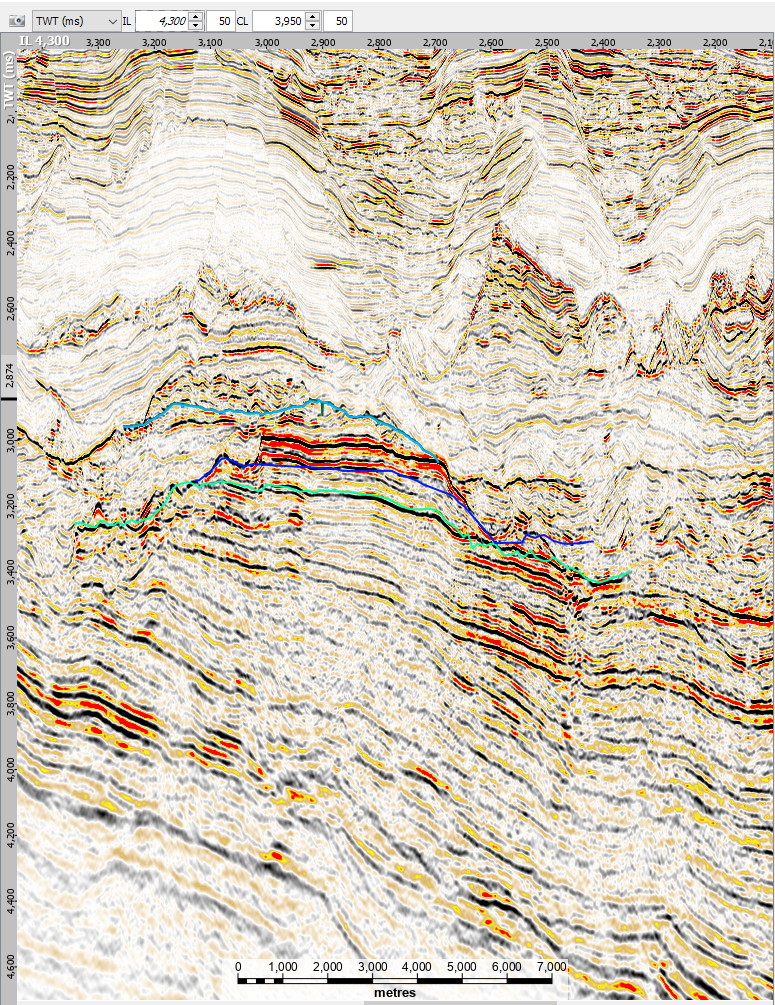
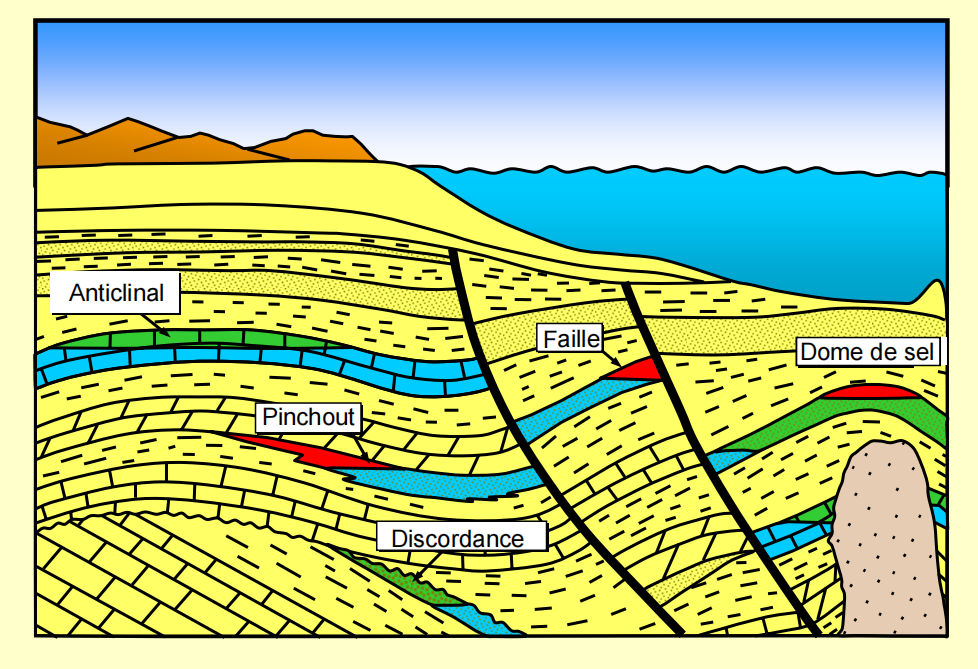
Figure 13: Seismic interpretation showing a structural trap (anticline)
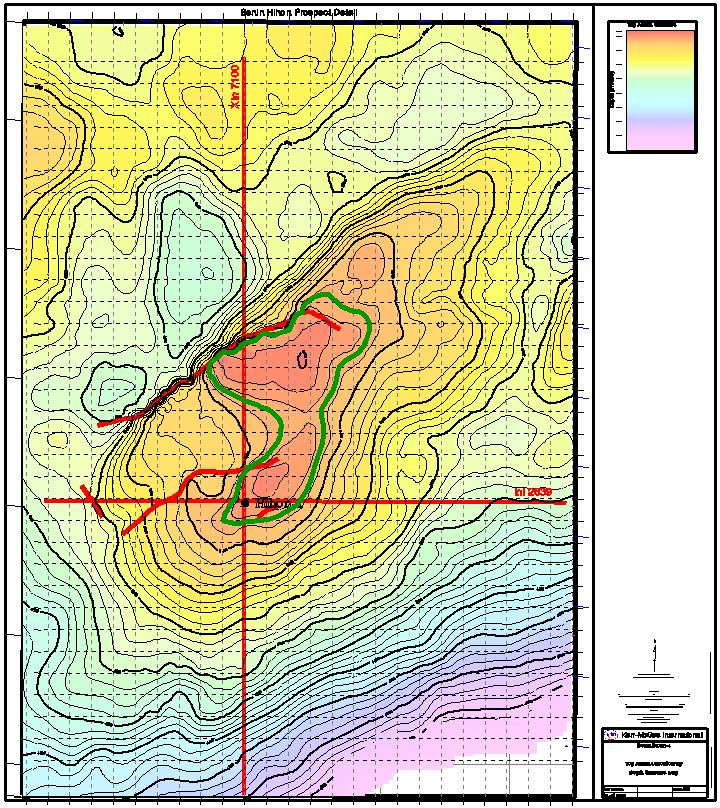
Figure 14: Some types of traps
Figure 15: Depth map showing the roof of a tank
- Geological risk assessment
Geological hazard assessment is used to determine the probability of success of exploratory drilling on a mapped prospect. The assessment of the geological chances of success associated with a prospect is done by assigning probabilities to the key geological factors that are essential to the formation and preservation of an oil or natural gas accumulation.
Thus, the determination of the geological risk of a prospect makes it possible to calculate the probability of success of this prospect. It is determined by the formula:
P(prospect) = P(source rock) x P(reservoir) x P(trap)
Waterproof trap + waterproof cover
Porosity and permeability of reservoir rock
Geological hazards
Maturity of the bedrock and therefore its degree of migration to the reservoir
(iv) Volumetric assessment of hydrocarbon resources
The evaluation of the hydrocarbon resources contained in the prospect consists of estimating the volume of oil or natural gas that could be found in the prospect. It is carried out using the geological and petrophysical parameters of the reservoir rock. This assessment is more accurate when using the results of the work carried out, in particular the results of exploratory drilling. Failing this, the parameters from the seismic interpretation or from the wells adjacent to the research area are used.
Thus, the quantity of hydrocarbons (VHcP) in place, i.e. oil (STOIIP) or gas (GIIP) in place, is determined as follows:
VHcP = GRV x N/G x Ø x Shc x 1/FVF
With
IBC = Gross Rock Volume: it is determined by taking into account the geometric shape of the reservoir and its thickness
IBCs = ∑Deposit Area x Deposit Thickness
N/G: This is the ratio between the net thickness of the tank and the gross thickness of the tank. It should be noted that the thickness of the deposit does not often have a uniform lithology. It is often interspersed with layers of impermeable clay.
Ø (Phi) = Reservoir porosity which is estimated from electrical logs, core measurements and knowledge from similar formations. It is determined as follows:
Porosity (Ø) = Pore Volume (Vv)/ Reservoir Volume (V)
Shc = Hydrocarbon saturation determined by knowing the water saturation Sw. It is usually calculated from the well digraphies in the effective porosity zone.
Shc = 1-Sw
FVF: This is the Volumetric Factor of Formation. It expresses the change in the volume of the oil from the tank to the surface under standard pressure and temperature conditions (pressure: 1 atm and temperature: 15° Celsius). FVF of the oil is Bo and for the gas is Bg.
FVF = Reservoir Volume/Surface Volume
- For the oil
FVF = Bo and Shc = So (oil saturation)
Thus,
STIIOP = GRV x N/G x Ø x So x 1/Bo
Associated gas in place = STOIIP x GOR
- For gas
FVF = Bg and Shc = Sg (Gas Saturation)
Thus,
GIIP = GRV x N/G x Ø x Sg x 1/Bg
Condensate in place = GIIP x CGR
with:
GOR: called Gas-Oil Ratio is the ratio of gas volume to oil produced
CGR: called Condensate-Gas Ratio is the ratio of condensate volume to the volume of gas produced
A lead ranking is performed when multiple leads are mapped on a contracted block. This classification is based on geological hazards (probability of success), the volume and type of hydrocarbons potentially in place, and other petrophysical parameters. The choice of the prospect(s) to be drilled takes this ranking into account in order to maximize the chances of success.
Once a discovery is made, the ICC carries out the work to evaluate the deposit. This work includes a set of activities, namely the drilling of appraisal or delineation wells, geological and geophysical studies of reservoirs as well as an evaluation of reserves to decide on the development of the deposit when it is commercially exploitable.
- Financing of exploration activities
Exploration activities are almost entirely funded by the IPCs as states lack the financial resources, technology, human skills and operational capacity to engage in this high-risk project.
Oil exploration is the most delicate phase with high risk in the sense that it involves heavy capital investments (CAPEX) for results whose probability of success is generally below the global average. Despite technological advances in oil exploration, the failure rate is high. About 2/3 of the exploration wells are dry. In the absence of commercial discovery during the exploration period, the CPIs lose all their investments.
- Responsibilities of States in the exploration phase
During this phase, the host country, although it does not often take financial risks, has a great responsibility vis-à-vis the contracting CPIs who assume virtually all the risks associated with the investment capital.
The two most essential roles of the State, owner of potential resources, are: the establishment of an oil database and the monitoring and technical and financial control of all activities carried out by the contractor.
- Oil Data Management
The host country must ensure the collection and preservation of all oil data acquired during this phase. These oil data constitute a decisive basis for future investigations. They have significant scientific and economic value in the sense that they provide information on the geology and resource potential in the subsoil of states.
This data concerns those produced during the exploration phase but also those generated during the development, production and abandonment phases. Some countries, due to a lack of means of conservation, i.e. technical and infrastructural capacity, entrust the storage and management of their data to partners or specialized foreign companies outside their territory. In doing so, they behave like landlords who entrust the key to their safe to their tenants.
“By entrusting the management of oil data to specialized foreign companies, states no longer have enough control over the various manipulations and businesses to which they are subjected. As they do not have control and management tools, they are unaware of the quantity and quality of their data, and consequently the economic value of their assets”.
They are therefore required to believe in the balance sheets and evaluations as well as in the decisions and choices of oil companies in the context of the implementation of oil operations.
This is why it is necessary for States to create adequate storage and conservation centers as well as laboratories for quality control and analysis of acquired oil data, which, in the same way as oil resources, constitute State assets. To this end, it is essential for States to adopt a real policy for the control and management of their oil data. Some West African countries are aware of this and are developing a good data conservation, analysis and management strategy. Côte d’Ivoire and Nigeria are a good example of the establishment of a centre for adequate storage and preservation and data analysis (Figure 16).
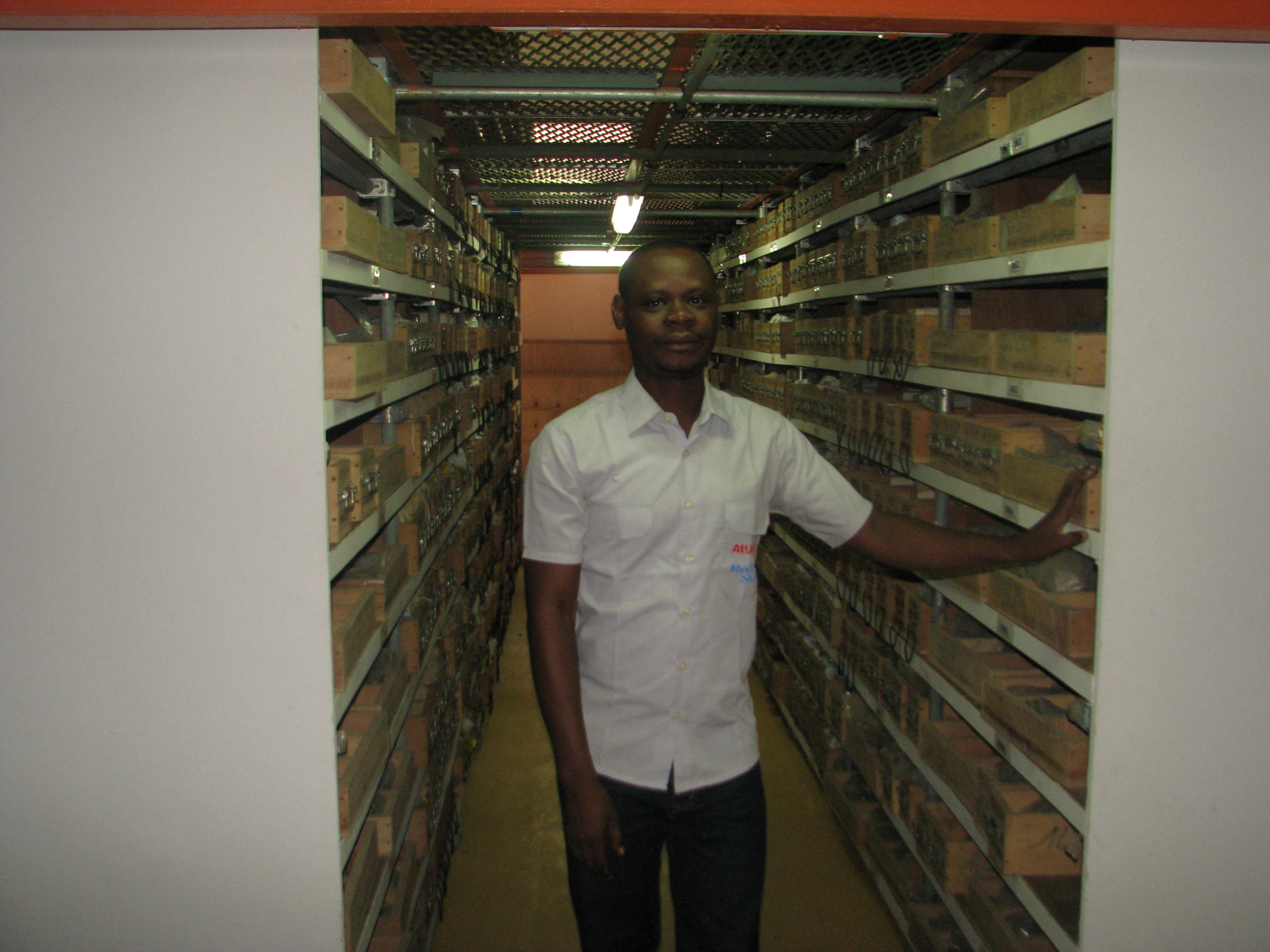
Figure 16: Photos showing the core library of Côte d’Ivoire at the Direction of the PETROCI Analysis and Research Center

- Monitoring and control of activities
The regulation of exploration activities includes not only the monitoring of the implementation of contractual obligations but also the control of the costs of carrying out activities as well as compliance with standards and procedures for the execution of activities in accordance with national regulations or those of the international oil industry. The monitoring and technical control of activities are fundamental sovereign functions of the State that require the existence of qualified human resources and the implementation of effective control tools for oil and exploration operations, including the management of environmental risks and impacts related to the implementation of these activities. This monitoring must be regular and well planned insofar as it is at this level that the contractor, driven by the search for maximum profit, could take advantage of the failure of the State’s control and audit mechanism to overestimate exploration costs or even deviate from the best practices of environmental protection during the implementation of activities.
In short, it is the responsibility of the States to monitor the effectiveness of the implementation of the activities reported, the optimal deadlines for completion, the quality of the work carried out at the technical level and in compliance with the environmental standards accepted or prescribed by the regulations and to audit the actual costs of their implementation through the development of a directory of the costs of the activities. This directory will have to be updated to serve as a reference for confrontations and audits.
- Development Phase
2.3.1- Definition and strategies
The development of an oil field consists of carrying out operations that contribute to the establishment of the production infrastructure of the discovered field(s). These typically include production platforms, production drilling, and infrastructure for storing and transporting crude oil or natural gas from the wellhead to the point of delivery, and onshore or offshore effluent collection and treatment facilities. During this phase, geological assessment studies, reservoir evaluation, feasibility studies and FEED (Front and End Engineering Design) studies are carried out in order to choose the best development option from a technical, economic and social point of view. All these studies contribute to the elaboration of a Development and Operation Plan (PDO) which is a clear document that describes the feasibility of the development project in its various well-planned aspects.
The PDP includes:
-
Geological assessment
-
Reservoir evaluation and reservoir technology including secondary and tertiary recovery study
-
Production and Drilling Technology
-
Facilities
-
Equipment maintenance
-
Economic evaluation
-
Safety and Environment
-
Project organization and execution
-
Abandonment plan
From discovery to production, it takes an average of three to four years for the development of an oil field. This means that this phase is very delicate in the sense that the optimal exploitation of a deposit depends on the development model chosen.
The choice of a development model depends on several technical and economic parameters, including the existing facilities or those to be set up, the nature or type of the reservoir (single or multilayered) and the thickness of the reservoir, the location of the reservoir (onshore, deep or shallow offshore), the quality of the reservoir, the quality of the crude oil and its market price, etc.
2.3.2- Reservoir Evaluation Methodology
The reservoir assessment is carried out according to the methodology shown in Figure 17 below. This methodology starts from data collection to the economic evaluation of the deposit. It allows, after processing, interpretation of the data, i) to carry out the modelling/simulation of the reservoir on the basis of the data available on the reservoir, i.e. seismic data, well logs, cores, well tests, ii) to determine the performance of the reservoir and iii) to project the most optimal and responsible production profile as well as the economic profitability of the development project with a view to decision-making of the deposit.
Geological and reservoir simulation studies provide detailed models of underground reservoirs to predict their behavior over time through the calculation of fluid flow fluxes that are a function of reservoir properties and well conditions (Figure 17). Simulation is therefore an essential decision-making tool that allows:
-
optimize production through i) a better understanding of the most efficient means of hydrocarbon recovery, i.e. the different recovery methods adapted to the characteristics of the reservoir (reservoir with active aquifer, reservoir with cap gas, the lithological nature and thickness of the reservoir, etc.), ii) the number and types of wells (vertical, inclined or horizontal) adapted to the reservoir in order to maintain its performance ;
-
manage risks by assessing and mitigating risks associated with drilling and production
-
to make an economic planning or forecast to help in an investment decision.
Excavated material, cores, seismic data, logging, well tests, etc.
RAW DATA COLLECTION
Descriptive elements of the reservoir (porosity, permeability, water saturation, pressure, oil viscosity, etc.)
PROCESSING AND INTERPRETATION OF THE DATA COLLECTED
INTEGRATION AND
MODELING
Tank Models and Understanding of the Tank
EVALUATION DES OPTIONS DE RECUPERATION
-
Recovery Methods (Primary, Secondary, and Tertiary)
-
Types/types of wells (production, injection and observation/horizontal, vertical, inclined, etc.)
-
Etc
Tank Performance Prediction
CAPEX, OPEX, Risk
ECONOMIC EVALUATION AND DECISIONS
Figure 17: Methodology Tank Evaluation
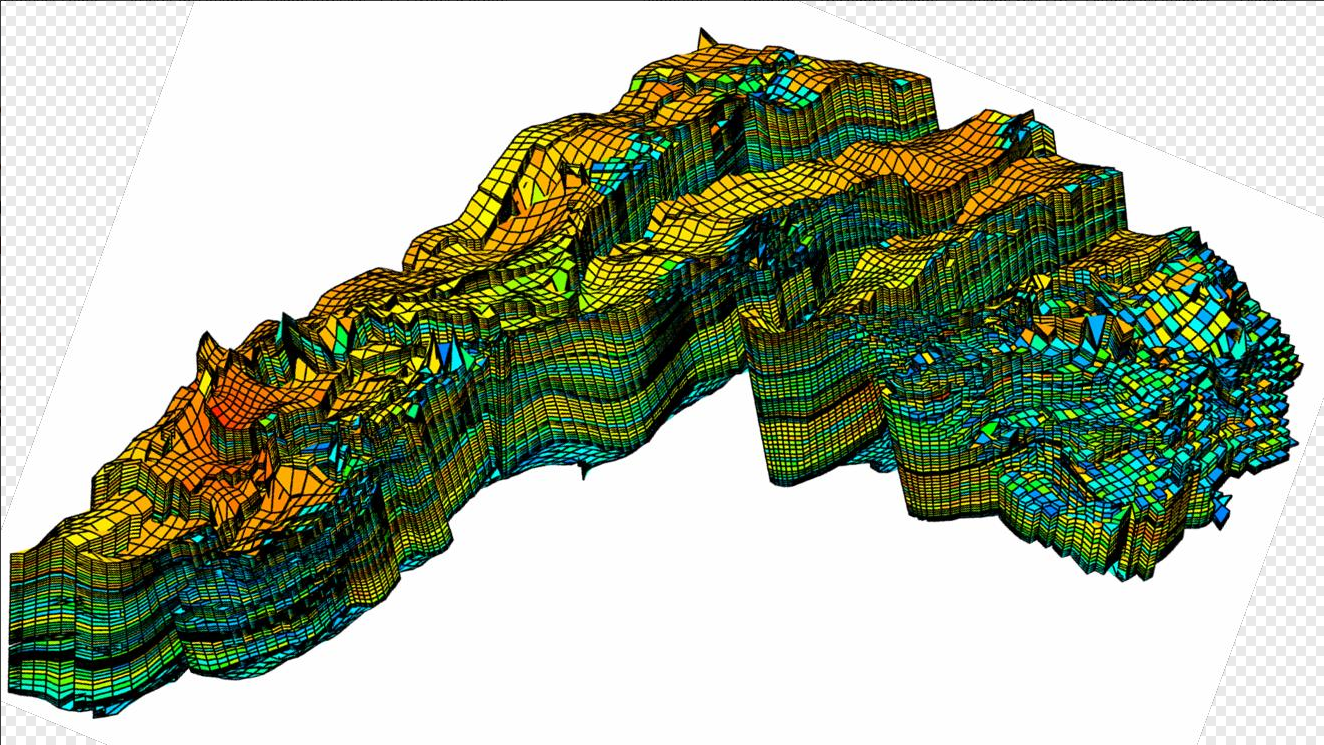
Figure 18: Diagram showing a reservoir model (Vilgeir Dalen, StatoilHydro, 2007)
2.3.3- Financing of development activities
Development involves large capital expenditures (CAPEX) in the upstream oil subsector. Enormous financial resources are invested in the production of hydrocarbon deposits. It should be noted, however, that the risk is lower during this phase compared to the exploration phase; The question that arises is no longer the doubt about the existence of the deposit, but it is above all that linked to the benefit/cost ratio of investments, which is a function of the technical and economic parameters and conditions related to its exploitation. This is why, before embarking on development operations, several preliminary profitability studies are carried out and recorded in the PDO submitted to the State for approval.
2.3.4- Roles and responsibilities of States in the development phase and Relevance of a PDO
The development of an oil field is subject to the approval by the Government of a Development and Operation Plan (PDO) or a feasibility study drawn up by the contractor and submitted to the State. The PDP preparation and approval process provides opportunities for dialogue between the contracting company and the host state on how the field should be developed and produced in a sustainable manner so that both parties can benefit the most. Thus, before the approval of the PDO, the State must proceed:
- The geoscience assessment of the PDP , which aims to:
-
Ensure that the quality of the reservoir interpretation is convincing enough for a development decision
-
Agree with the ICC on the PDP’s findings before it is approved
To this end, it is recommended that States:
-
Conduct in-house studies and interpretations based on well data, seismic data including 3D and VSP, maps etc.
-
certify the assessment of recoverable reserves and the feasibility study by its specialists or a third party
-
to organise meetings and dialogues with the operating company on the basis of the results of the counter-expertise work carried out by the State for fruitful technical exchanges
- The evaluation of the reservoir which aims to**:**
-
Ensure an optimal production strategy selection
-
Define the use of gas in an oil field
-
Ensuring the possibility of oil recovery in a gas field
-
define and guarantee the implementation of a serious and responsible production profile
-
Ensure proper management of the tank
-
Ensure consistency (correlation) between geology, reservoir and production strategy.
In short, the State, as the owner of resources, must:
-
avoid the hasty start of hydrocarbon development operations. Any start of the development plan must require the approval of the State after examination of all the preliminary studies and documents required by the petroleum legislation, including the reservoir simulations.
-
assess the economic development model that takes into account economic risks and uncertainties (price of a barrel on the international market), the duration and rate of depreciation or the oil cost recovery model, the production profile and by extension the duration of production. The business model proposed in the PDO or feasibility study must also have a positive positive return on investment
-
ensure that the PDP incorporates the requirements for abandonment of the field at the end of production. These requirements relate to the plugging of wells and the decommissioning of facilities to avoid safety and environmental damage.
This is why States must examine the results of the evaluation and simulation of the reservoir and the economic model developed or carried out by the operators (CPI) in order to better exchange on the uncertainties in order to adjust or build a new consensual production model if necessary.
In view of all the above, it is necessary for States to have a centre for the interpretation of seismic data, modelling, evaluation and simulation of the reservoir with qualified personnel to carry out a second assessment of the results of the reserve assessment studies, the development plan or the feasibility study proposed by the CPIs or, failing that, to have these studies certified by a third party.
The rigorous monitoring of activities during development is as important as during the exploration phase and requires vigilance, professionalism and probity on the part of the actors in charge of monitoring activities to avoid being duped or corrupted by the CPI who can manipulate the costs of operations for their own benefit; which will lower the margin of the profit to be shared.
“The hasty start of development operations for political propaganda reasons is often at the origin of immature development options that are sometimes unsuitable from a technical and operational point of view. This is at the origin of the technical difficulties during the operational implementation of the PDO. These difficulties very often lead to unnecessary loss of time, causing an increase in investments and poor control and management of the reservoirs, thus jeopardizing their performance in the short and medium term.”
“The development and production of the Sèmè oil field (Republic of Benin), discovered in 1968, is a good example of an ill-prepared oil adventure. Production started in 1982 by the Norwegian company SAGA Petroleum, with an immature feasibility study (weakness of the reservoir study, non-optimal development plan, inconsequential economic profitability study that does not take into account all the above-mentioned parameters, not taking into account an abandonment plan). After only a few years of production, precisely in 1985, with seven wells in production, the field was already experiencing a meteoric rise in water to the detriment of oil. Later in 1997, the situation was more alarming with about 90% water in most wells in production. The tanks were damaged. This is probably due to the weakness of the feasibility study, particularly in terms of the reservoir evaluation and simulation studies (number of wells put into production and the distance between wells because this field has a very active aquifer), the lack of professionalism of the operating companies and political considerations. The field was closed in 1998 after a change of hands with several operators for production (Saga Petroleum, PANOCO, PPS, ASHLAND, Atlantic Petroleum Inc,), under deplorable and inappropriate economic, financial, social and environmental conditions (high debts, dismissal of staff with unsatisfactory accompanying measures, failure to plug wells or secure offshore infrastructure, which today constitute a major environmental and security risk).
The redevelopment operations of the Sèmè field started in 2014 by the Nigerian company SAPETRO, which signed a production sharing contract on block 1 in 2004, also ended in failure due to the inadequacy and immaturity of the proposed development model, which led to heavy capital investments (construction of an oil platform, onshore processing and storage units with flowlines as well as new mooring buoys for export), and studies of the economic sensitivity of the project. The installation of this equipment and production units constitutes a heavy investment for residual reserves to be produced.
The economic model developed by SAPETRO was based on a barrel price of crude oil estimated at at least $80. Unfortunately, in 2015, the oil counter-shock of 2014-2016 which caused a fall in the price of a barrel of Brent from $110 to $36, between the beginning of July 2014 and January 2016, combined with the failures of two wells out of the three started due to the technical difficulties encountered during drilling, led to the abandonment of the SAPETRO redevelopment project which could not produce a single drop of oil and in turn put an end to Benin’s dream of becoming a producing country again in 2015“.
- Phase de Production
2.4.1- Definition and characteristics
This is the phase most awaited by the parties, namely the State and the contractor. Good tank management is always related to the technology used. It makes it possible to optimize production, in this case recoverable reserves. This is a very serious exercise that requires rigorous monitoring of production and periodic evaluation of the tank.
The minimum service life of the production facilities is 30 years. The maintenance of the installations is essential in order to prevent accidents, pollution and production interruption.
The life cycle of a hydrocarbon field put into production presents the different phases as shown in Figure 19 below.
Figure 19: Production profile of an oil field showing the life cycle of an oil field
The production profile adopted is an indicator of the duration of production or the life of the field. This profile is generally subdivided into three periods:
-
The build-up period or preparatory period during which the production wells are gradually brought into production. During this phase, there is a gradual increase in production over time to a maximum limit
-
The period of the plateau during which a constant production rate is maintained
-
The period of decline when producing wells show a decline in production throughput
Thus, the production time depends on the build-up phase, the plateau which can have a high, moderate or low production rate, but also the decline phase which can be mild or abrupt.
During the decline phase, new peak production phases (secondary or tertiary build-up) are often initiated by the use of secondary and tertiary recovery methods depending on the geological and geometric characteristics of the reservoir, the properties of the fluid and the petrophysical parameters of the reservoir.
2.4.2- Recovery methods and strategies
In oil production, it is impossible to fully recover the quantity of hydrocarbons initially in place from the reservoir. The recovery factor represents the amount of oil that can be extracted from a reservoir relative to the total amount of oil present in the subsoil. For optimal production of existing reserves, it is necessary to apply and choose the best techniques and recovery methods with regard to the properties of the reservoir and the development objectives. Thus, we distinguish:
-
Primary oil recovery describes the production of hydrocarbons under the natural entrainment mechanisms present in the reservoir without the additional aid of injected fluids such as gas or water. This recovery induces the loss of pressure in the reservoir due to natural production or production activated by a pump. The primary recovery factor for oil is typically between 15 and 20 per cent of in-place reserves.
-
Secondary recovery occurs when the reservoir pressure becomes insufficient to drain the oil from the reservoir to the surface or to cause natural recovery of the hydrocarbons. It consists of supporting the reservoir’s pressure by injecting water or immiscible gas into the reservoir to move the oil and lead it to a production well. When the oil field does not have a gas cap, it is recommended to inject water to improve the performance of the reservoir. Recovery can be improved by 15 to 45% in addition. Secondary oil recovery is a mechanical or physical operation that does not include chemical compounds or reactions (Jianjie Niu, Qi Liu, Jing Lv, Bo Peng, 2020).
-
As for tertiary recovery, it uses the injection of miscible gas such as as as thermal, chemical and biological methods. The objective of tertiary recovery is to modify the physicochemical characteristics of the oil to promote its flow. This method makes it possible to recover another 5 to 10% of oil. Tertiary recovery techniques are extremely expensive and are only undertaken when the price of a barrel of crude oil is high enough to justify the related investments.
In total, the oil recovery rate varies from 35 to 75% depending on the parameters influencing the recovery. The price of gas is better and is generally more than 75%, as gas is less dense, more mobile and therefore easier to reach the surface than oil.
The factors influencing recoveries are of several kinds:
-
Reservoir properties: The porosity, permeability and saturation of the reservoir determine the amount of oil that can be recovered. High porosity and permeability help extract more oil from the tank, while low porosity and permeability make the extraction process difficult.
-
Oil Properties: The viscosity, density, and API density of the oil determine the efficiency of the extraction process. High viscosity oil is difficult to extract, while low viscosity oil is easier to extract. Similarly, the density of the oil affects the recovery process. Heavy oil is more difficult to extract than light oil.
-
Recovery techniques: Artificial lifting techniques such as beam pumps, gas struts, and electric submersible pumps can increase the amount of oil recovered from the tank. The choice of recovery technique depends on the properties of the reservoir and the properties of the oil.
-
Production rate: the application of a very high production rate can lead to a decrease in the tank pressure, and damage the tank as quickly as possible; which can reduce the amount of oil recovered.
-
Tank pressure: The pressure in the tank decreases as oil is extracted, which can reduce the amount of oil recovered. Using artificial lifting techniques during primary recovery can help maintain tank pressure, resulting in increased oil recovery.
2.4.3- Financing of production operations
Investments during this phase are lower than in the previous phase and are referred to as “operating costs (OPEX)”. These costs are easily financed by stakeholders because of the revenues that are generated from production. They relate to the costs of maintaining the installations and reconditioning the wells (workover work) and sometimes to expenses related to improving the performance of the reservoir through geological and reservoir studies.
2.4.4- Responsibilities of the Host States in the production phase
As in the development phase, the vigilance of the states that own the resources is required in order to avoid false declarations of production. This vigilance requires adequate training in the monitoring and inspection of production and transport activities as well as the control of equipment and measurement parameters agreed upon or accepted in the oil industry.
Indeed, from the wellhead to the point of delivery, the hydrocarbons produced can be subject to unhealthy handling by the CPIs whose objective is to maximize their profits. They can truncate the quantities of hydrocarbons produced so as to set up a mechanism for false declarations if the method of monitoring and inspecting oil operations is not effective at the state level. This is why controls and inspections of equipment and installations built on site or imported for the storage and transport of hydrocarbons are recommended to determine the compliance of the condition of the installations with the necessary international requirements and to ensure that measurements of the physico-chemical parameters of hydrocarbons or counts are made a certain number of times along the path of products from the wellhead to the point of delivery to ensure reliable results. The purpose of these measurements/counts is to determine, among other things, the quantity and quality of the production, transport and sales chain.
Tax metering is the measurement carried out in the context of the purchase and sale of crude oil or natural gas and the calculation of taxes (e.g. CO2 tax, NOx tax) and royalties.
In addition, it is important to emphasize that the volume of crude oil depends on the temperature. A change in temperature causes a change in the volume of crude oil. Indeed, crude oil contracts in the cold and expands when the temperature increases. In other words, for a quantity of crude oil produced whose volume is measured at 120°C at the wellhead, the same volume measured at 15°C at the point of delivery is less than that measured at 120°C.
By way of illustration, a manipulation or measurement error of 0.4%, for example at the measurement point to the detriment of the producing States, would generate significant financial losses as shown in Table 4 below for these countries and an equivalent gain for the contracting company:
| Country | Daily production (bl/d) | Measurement/Counting Error (%) | Price per barrel ($US) | Financial loss ($US) | |
|---|---|---|---|---|---|
| daily | annual | ||||
| Niger | 53 000 | 0,4 | 90 | 19 080 | 6 964 200 |
| Ivory Coast | 74 000 | 0,4 | 90 | 26 640 | 9 723 600 |
| Ghana | 188 000 | 0,4 | 90 | 67 680 | 24 703 200 |
| Nigeria | 1 539 000 | 0,4 | 90 | 554 040 | 202 224 600 |
This means that a margin of error greater than the tolerance threshold allowed in the oil industry generates losses for one or the other of the parties. Margins of error are usually due to improper calibration or calibration of the measurement and metering system during the transfer of hydrocarbons, failure or conscious or unconscious manipulation of the measuring instruments and conditions.
Unfortunately, African States pay very little attention to these aspects and may be victims of false declarations by the ICCs due to the absence or inadequacy of monitoring of activities and/or the weak technical competence of the inspectors in charge of monitoring and monitoring activities.
“It is unfortunate to note that some senior officials and leaders of certain producing countries of sub-Saharan Africa, congratulate CPIs for the realization of some flattering socio-community works (construction of boulevards, schools, markets…) in their country, forgetting the regulatory and inspection roles that are their prerogatives and whose full exercise will considerably reduce the shortfalls for their State and consequently have a positive and better impact on the development of their nation.
In many respects, Corporate Social Responsibility (CSR), which is advocated and introduced in certain extractive industry contracts and projects, and which should be a springboard for socio-community development and for better environmental management in the geo-extractive industries, is akin to a form of contemporary neo-colonialism where the CPIs, representing Western powers, seek to please themselves in order to better establish their domination and hegemony and in this case for the plundering of resources“.
“Let’s not forget that the CPIs are not philanthropists; Their main objective is to make the maximum profit in record time.”
This is why it is essential that African countries, especially those in sub-Saharan Africa, take their responsibility and effectively play their regulatory role. As such, they must work more to:
-
mastery of the operating principles of the devices and approval of measurement procedures,
-
periodic or regular inspections of equipment, apparatus, parameters and procedures jointly accepted and in accordance with the use in the international petroleum industry, and finally
-
the training of adequate skills in the field of control and inspection in the upstream oil sector in order to ensure that the performance of operations is carried out in accordance with the rules of the art and in transparency.
Abandonment
2.5.1- Definition of the concept
The abandonment or closure of a field occurs when the recoverable reserves are exhausted or when the installations have reached their useful life. This means that the project has reached its economic profitability limit.
Any PDO must contain a plan for the abandonment and decommissioning of petroleum facilities used in the development and production of hydrocarbons.
Thus, decommissioning is a process that sanctions the end of the life cycle of an oil or gas field and makes it possible to decide or make the choice of the best option to put oil and gas facilities out of harm’s way from a safe and environmental point of view. To this end, it consists of:
-
plugging wells (production, injection and/or observation wells);
-
cleaning of all pipelines, reservoirs or hydrocarbon storage and processing tanks;
-
securing the facilities;
-
the total or partial removal of equipment or facilities installed for the operation;
-
the reuse of the installations or their disposal under suitable conditions and arrangements.
The implementation of the abandonment plan must take into account international regulations and legislation in the countries concerned. Such legislation generally takes into account the needs of environmental protection, safety of navigation, fishing activities and other uses of the marine environment.
2.5.2- Financing of decommissioning/abandonment work
The responsibility for financing the abandonment work lies with the owner of the equipment and installations defined according to the type of contract signed. For example, in the case of a Production Sharing Contract, the costs of the abandonment work (ABEX) are generally financed from the provisions put in place during the production phase, in accordance with the contractual provisions. In most legislation and Production Sharing Contracts, the host state authorizes the CPIs to use this provision to carry out abandonment or decommissioning work at the closure of the oil and gas field.
2.5.3- Responsibilities of States in the phase of abandonment
The role of the State is to ensure that a decommissioning/abandonment plan has been drawn up and integrated into the PDO or in the feasibility study of the development submitted by the contractor. This elaborate plan can be updated or adjusted according to changes in the technology used during development and production. The decision to approve the decommissioning plan by the State, which defines the best technical solution, must take into account safety, environmental and economic criteria, in particular the cost of decommissioning, etc. The State, in its decision, must set the maximum duration of the decommissioning on the basis of the contractor’s recommendations.
- Summary of expenses and revenues during the life cycle of an oil project
The summary of cash flows from pre-licensing to abandonment indicates the expenditures (investments) incurred in oil exploration and development activities and the revenues derived from production (Figure 20).
The financing of pre-licensing activities is generally a matter of state sovereignty and some activities may be carried out under a service contract. These activities are therefore part of the sovereign spending of States.
Once a contract is signed, the contractor undertakes at its own risk to make enormous capital expenditures (CAPEX) during the exploration and development phases.
During the production phase, the parties to the contract (State and contractor) generate income from the sale of the hydrocarbons produced. Investments (OPEX) relate to the maintenance costs of production equipment and facilities and are easier to mobilize by contract partners who use part of their production revenues. Cash flow is positive. The profits from the production are shared between the parties in accordance with the contractual provisions.
In the abandonment phase, the expenses related to the works (ABEX) are financed by a part of the income from production in accordance with the contractual provisions which generally provide for provisions for the execution of the abandonment works.
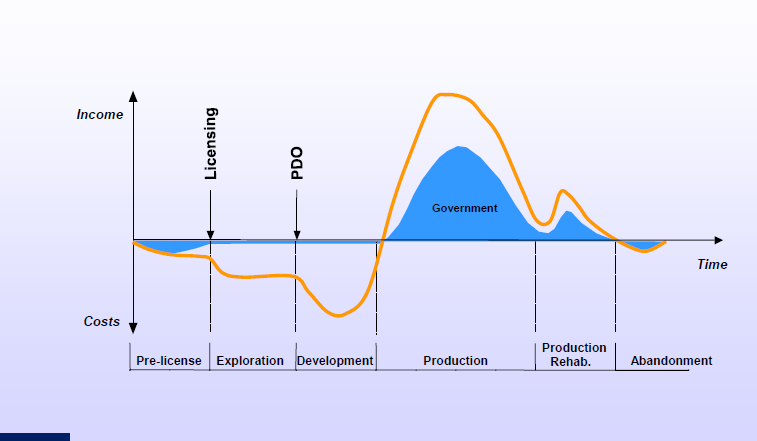
Figure 20: Cash flows during the different phases of upstream oil activities (Dr. Alfred Kjemperud, 2007)