Chapter 1: Value Chain of the Hydrocarbon Sector
As shown in Figure 1, the value chain of the oil sector or the oil industry includes three segments, namely: upstream, midstream and downstream.
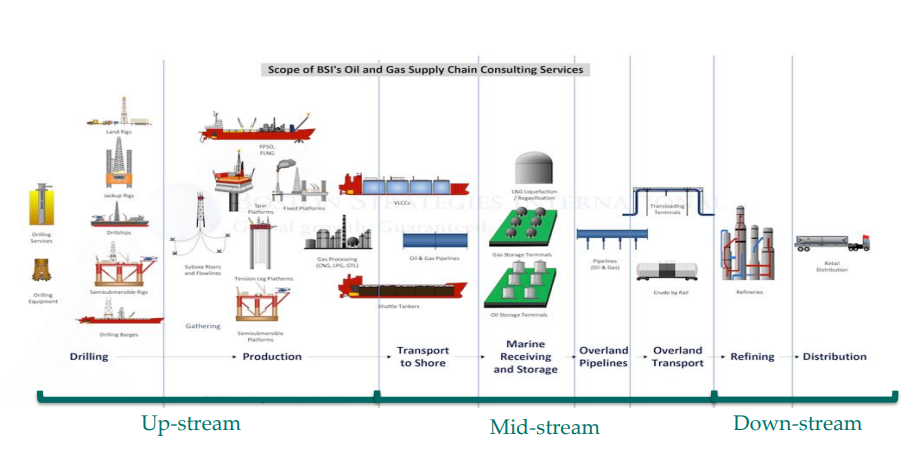
Figure 1: Oil Sector Value Chain
- The Upstream segment
1.1.1 - Features
Upstream oil is the foundation or early stages of development of the oil industry. It is characterized by a complex set of operations that contribute to the discovery and exploitation of oil and natural gas formed millions of years ago in the subsoil. The upstream segment essentially includes activities from the exploration to the production of hydrocarbons. It deals with the location of oil and gas extraction sites, exploration drilling and the production of crude oil and natural gas. Three main stages make up this segment:
-
Research or exploration: the identification of hydrocarbon accumulations by various geological and geophysical methods at the surface and depth following the granting of a petroleum licence or authorization;
-
Extraction or exploitation which is composed of two sub-phases:
-
Development: the determination and implementation of technical and infrastructural conditions for extraction according to geological, reservoir and economic parameters
-
The production of the field during which the various techniques of extraction and recovery of oil and natural gas are implemented;
-
-
Abandonment, which generally occurs when oil reserves are depleted and it is necessary to secure and/or dismantle production facilities and infrastructure to avoid and/or minimize various environmental problems inherent in the operation.
The fundamental characteristics of upstream segment operations are:
-
High geological risk, which results in high uncertainty or no guarantee of discovery of commercially exploitable reserves.
-
Colossal investments: exploration and development activities involve heavy capital investments due to the advanced technologies used, equipment and infrastructure necessary to carry out these operations;
-
the management of environmental and safety risks and impacts inherent in research (seismic, drilling, etc.) and production operations (pollution of terrestrial, marine and atmospheric environments by oil spills, flaring, gas leaks and emissions, fires and other construction site accidents).
1.1.2- State of play in West Africa
The West African sub-region holds a third of the continent’s oil and natural gas reserves . About 30% of the world’s oil reserves are in the Gulf of Guinea (ECOWAS, 2019). An assessment of hydrocarbon resources after recent discoveries in some West African countries estimates reserves at about 39 billion barrels of oil and 372,000 billion cubic feet (372 TCF) of natural gas (Table 1).
| Country | Crude Oil Reserves (MMBLS) | Gas Reserves (BCF) |
|---|---|---|
| Nigeria | 30.031* | 202.000* |
| Ghana | 1813 (732 proven) | 4,100 (1,771 proven) |
| Senegal | 2 030* | 42 024* |
| Mauritania | 20 (proven)* | 110 000 (estimation)* |
| Ivory Coast | 3.100 (estimation)* | 4.600 (estimation)* |
| Niger | 150 | |
| Benin | 331 (estimation) | 477 |
| Guinea-Biseau | 840 | |
| Mali | 645 (estimation)** | 9 000 (estimation)** |
| Total | 38 960 | 371 724 |
Table 1: Estimation of hydrocarbon resources in West Africa
*Data Ministries
**RPS Energy Report, 2006
According to Trading Economics (2025), the four (04) largest producers in 2024 (Table 2) are Nigeria (Benin Basin, Niger Delta and intracardboard basins) which is by far the most popular with 1,539,000 barrels/day, followed respectively by Ghana (Saltpond and Tano basins), 188,000 barrels/day, Niger (three intracratonic sedimentary basins, namely Chad, Illumenden, Djado), 53,000 barrels/day and Côte d’Ivoire (offshore coastal sedimentary basin), 47,000 barrels/day.
| Country | Last | Previous | Reference | Unit |
|---|---|---|---|---|
| Nigeria | 1539 | 1485 | 2025-01 | BBL/D/1K |
| Ghana | 188 | 188 | 2024-10 | BBL/D/1K |
| Niger | 53 | 43 | 2024-10 | BBL/D/1K |
| Ivory Coast | 47 | 42 | 2024-10 | BBL/D/1K |
Table 2: Daily production of countries (Trading Economics, 2025)
Significant discoveries of oil and especially gas have been made onshore and offshore in Senegal and Mauritania in the Senegalese and Mauritanian sedimentary basins that are part of a vast West African Basin called “MSGBC Basin (Mauritania – Senegal – Gambia – Bissau – Conakry)”, Fig. 2a. These two states, already oil producers, have started production of a large cross-border gas field thanks to the “Greater Tortue Ahmeyim” offshore gas project, whose resource discovered in 2015 by the American Kosmos Energy is estimated at more than 15,000 billion cubic feet. The field is being developed and produced with the support of the international oil company BP, with the entry of the first LNG cargo on the world market in April 2025.
Benin, located in the Gulf of Guinea, a proven oil-producing province (Fig. 2b), was also a producer from 1982 to 1998 of a marginal field located on Block 1 of its Coastal Sedimentary Basin, discovered in 1968 by the American company Union Oil of California. It has just restarted production from the Sèmè field with Akrake Petroleum, a subsidiary of the Norwegian company Rex, and has relaunched oil exploration.
Other countries are still in the exploration phase and will be able to make commercial discoveries in the sense that they are located in geologically promising areas. These include:
-
The Gambia, Guinea Bissau and Guinea Conakry, which share the same large MSGBC basin as Senegal, have good prospects for commercial discoveries given that the work carried out has proven the presence of hydrocarbons in their coastal basins. The same is true for Sierra Leone and Liberia, which are located in the same geological environment and whose coastal basins are framed by the large MSGBC basin and the Côte d’Ivoire basin in the Gulf of Guinea, where several discoveries have been made.
-
Mali with the Taoudéni Basin, the Nara Rift, the Gao Graben and the Tamesna Basin, which is the extension of the Ilullemedens Basin in Niger (Fig.3). Already in 2006, RPS Energy showed that the five blocks owned by the company Baraka Petroleum in the Taoudéni basin could house up to 645 million barrels of oil and 9 Tcf of natural gas.
-
Burkina Faso in view of its proximity to Mali and because of the presence of hydrocarbon showings identified in its western basin which borders the Nara basin in Mali
-
Togo whose coastal sedimentary basin is an integral part of the Gulf of Guinea, an oil-rich province proven by discoveries in Nigeria and Benin, Ghana and Côte d’Ivoire.
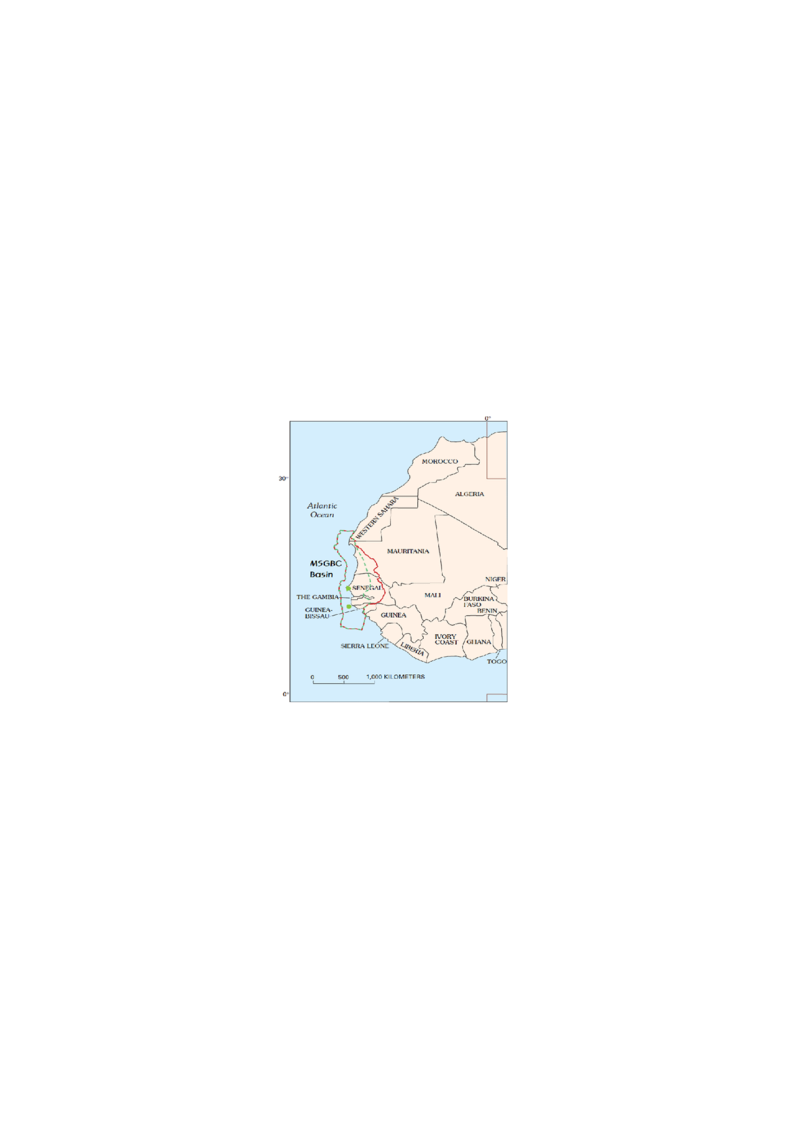
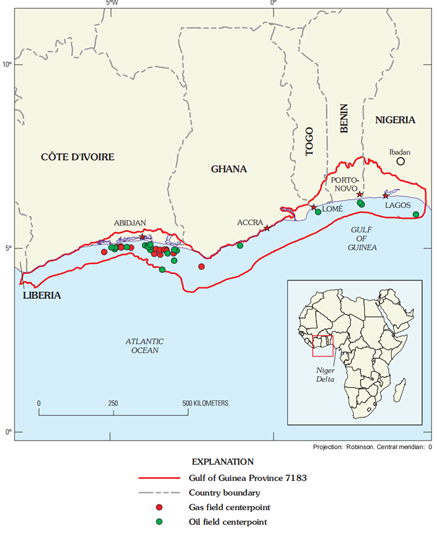
Figure 2: a and b Map showing the MSGBC Basin and Map showing the basins of the northern part of the Gulf of Guinea in West Africa
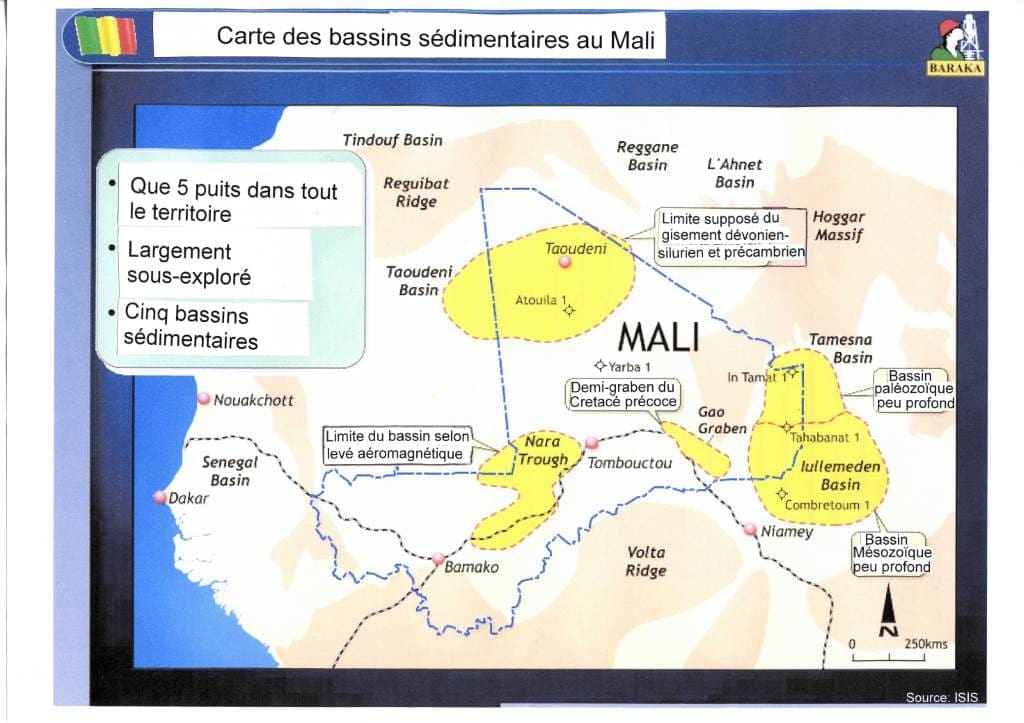
Figure 3: Map showing the sedimentary basins of Mali and Niger
Crudes discovered and produced in some West African countries are light to heavy with a low sulfur content (sweet) as mentioned in Table 3 below.
Table 3: Type of crude oil in selected West African countries
| Country | Density °API | Sulphur content (%) | Quality |
|---|---|---|---|
| Benin | 22 (Champ de Sèmè) | 0.32 | Medium and Sweet |
| 42 (Deep Offshore Block) | 0,1 | Light and Sweet | |
| Niger | 30 | Very Low | Medium and Sweet |
| Nigeria (Niger Delta Crude) | 20 to 25 |
0.17% Egina 0.6% (Qua Iboe et Forcados) |
Heavy, Medium and Sweet |
| 36 | Light and Sweet | ||
| Ivory Coast | 28, 31, 48 | Medium, Light and Sweet | |
| Ghana | 35,1 (Saltpont) | 0.16 | Light and Sweet |
| 35 (Jubelee) | 0.23 | Light and Sweet |
Some examples of internationally known upstream companies are ExxonMobil, Chevron, BP, Shell, ConocoPhillips, ENI, Total Energies, SINOPEC… These majors are joined by other independent oil companies that are challenging and investing in West Africa, such as Tullow in Ghana, Cairn in Senegal, Kosmos in Mauritania, CONOIL in Nigeria, CNPC in Niger, etc. In Africa, there is an emergence of National Hydrocarbon Companies such as SONATRACH in Algeria, PETROCI in Côte d’Ivoire, NNPC in Nigeria, SONAGOL in Angola, PETROSEN in Senegal, SONIDEP in Niger, GNPC in Ghana… but also some small private companies such as SAPETRO, ORANTO in Nigeria….
1.1.3- Main challenges
Faced with the issue of climate change, the challenges related to the financing of upstream activities, the development or the appropriation of technology remain a bone in the throat of African States and to which States must cooperate and pool their efforts in order to put in place appropriate strategies for the responsible and sustainable exploitation of their hydrocarbon resources.
- The midstream segment
1.2.1- Characteristics
The midstream segment of the oil and gas industry connects upstream and downstream oil activities and includes natural gas liquefaction and regasification operations, natural gas storage and transportation, and transportation of crude oil to refineries by means of ships, pipelines, tanker trucks, etc.
In detail, the intermediate segment includes activities related to:
-
the construction of oil and gas pipelines, crude oil and natural gas storage tanks, oil and gas loading terminals, and natural gas liquefaction and regasification facilities, including:
-
Flootload Liquefied Natural Gas (FLNG) units
-
Floating Storage and Regasification Units (FSRUs)
-
-
the transport of hydrocarbons by pipelines (oil and gas pipelines, etc.)
-
to the treatment of natural gas by separating it from the various hydrocarbons and fluids to produce a “pipeline quality” gas. In some cases, this activity may be considered to be an upstream oil activity
Crude oil and natural gas are transported either by land or by sea. The means of transportation typically used are tankers and pipelines that bring crude oil to refineries where it will be processed into petroleum products.
The term midstream is much more used in the oil industry in the US and Canada, which have developed large oil and gas pipelines and storage facilities run by private companies in these countries. For example, the Keystone Pipeline System is a network of oil pipelines in Canada and the United States, owned by TransCanada Corporation.
In European countries, the transportation and storage of crude oil tends to be integrated into upstream production activity. Many European pipelines are controlled by the governments of the countries they pass through or by state-owned crude oil transport companies in these countries. This state ownership tends to result in the absence of the midstream as a separately designated part of the oil production value chain.
Some examples of purely mid-market operating companies are Oasis Midstream Partners, Sanchez Midstream Partners, Hess Midstream, Magellan Midstream Partners, and EQT Midstream Partners. TransCanada Corporation.
1.2.2- State of play in West Africa
In West Africa, the transport network by gas and oil pipelines is still very weak. However, it should be noted that States are aware of the situation and that they are willing to develop structuring projects to secure the supply of hydrocarbons to the West African area.
The West African Gas Pipeline (WAG) and the Niger-Benin Export Pipeline are good examples of midstream development projects in this West African region.
The West African Gas Pipeline (WAG) is a natural gas pipeline transport system (onshore and offshore), over approximately 688.6 km from Nigeria (Alagbado) to Ghana (Takoradi) via Benin (Cotonou) and Togo (Lomé). Its objective is to transport natural gas produced in large quantities from Nigeria’s oil fields to Benin, Togo and Ghana, mainly for the production of electricity and the needs of the industrial sector. This pipeline, managed by the West African Gas Pipeline Company (WAPCo), has been operational since 2011 and aims to increase the population’s access to electrical energy at a reasonable cost and consequently give a boost to the economic development of states.
The Niger-Benin Export Pipeline is a pipeline transport system to export crude oil from AGADEM’s fields located in the DIFFA region of Niger via Benin through a loading terminal located at sea. This pipeline was built and is managed by the Chinese company WAPCO. It is the longest in the sub-region, has a length of 1,950 km, of which 675 km is on Beninese territory, and has a transport capacity of 90,000 barrels/day, extendable up to 140,000 barrels depending on discoveries in Niger.
In addition to these cross-border infrastructures, there are national oil and gas pipeline transport networks and crude oil storage infrastructures which are more or less developed in some countries such as Nigeria, Côte d’Ivoire, etc.
1.2.3- Main challenges
Challenges in the midstream sector include, among others, maintaining the integrity of storage and transport infrastructure (ships, trucks, wagons, pipelines, etc.), protecting workers involved in cleaning, purging and filling activities, and the lack of oil infrastructure to ensure the energy security of states.
In West Africa, the issue of securing infrastructure is worrying and topical. Security challenges are manifested by:
-
the vandalism of infrastructure due to the failure to take into account the socio-political realities and misery of the populations of the localities in which these sensitive and dangerous infrastructures are built;
-
acts of sabotage of facilities recorded by the growing rise of terrorism
To this end, the monitoring of these infrastructures and the real consideration of the concerns of indigenous populations must be considered more seriously in the context of oil and gas development projects. Taking these aspects into account will ensure the safety of workers and machines and avoid the risks of vandalism and sabotage of infrastructure that are the cause of oil spills, fires and explosions and consequently marine and terrestrial pollution.
The inadequacy and poor management of national and regional oil infrastructure for the transport and storage of hydrocarbons, liquefaction, regasification and gas processing is also a major weakness of the oil sector in West Africa.
The strengthening or construction of energy infrastructure such as gas-fired power plants and the creation of an African oil market will boost the development of the midstream and, in turn, strengthen people’s access to clean energy.
- Le segment Aval (downstream)
1.3.1- Characteristics
This segment deals with crude oil refining, transportation, storage and distribution of petroleum products as well as petrochemical activities. This is the stage where crude oil is transformed into different petroleum products namely fuel oil, diesel, gasoline (naphtha), kerosene (jet A1) and Liquefied Petroleum Gas (LPG) which are used for various purposes, such as powering vehicles, heating homes, electricity production etc. and asphalt or bitumen for road construction (Figure 4). The crude oil refining process is generally divided into three basic stages: separation, conversion, and processing. Refining techniques depend on the type of crude oil to be processed and the needs of the market. There are several types of crude oil classified mainly according to three criteria: density, sulphur content and geographical origin**.** API low-density and low-sulfur crudes have the best advantages because they are lightweight and less complex to refine and require little or no desulfurization.
In the petrochemical industry, long-chain hydrocarbons in oil and natural gas and naphtha are used to manufacture products such as plastics, rubbers and synthetic fibres, fertilizers, preservatives and detergents. For example, petroleum and natural gas products are used to make artificial limbs, hearing aids, and flame-retardant clothing to protect firefighters. Similarly, paints, dyes, fibers, etc. are made from oil and natural gas.
1.3.2- State of play in West Africa
In West Africa, the performance and quantity of refining units and infrastructure for the storage and transport of petroleum products remain problematic in that they are insufficient to cover fuel needs and ensure the security of supply of petroleum products. Thus, despite its great oil potential and the significant amount of oil production, most West African producing countries remain dependent on Europe and the Middle East for their supply of petroleum products, which constitutes an exorbitant bill for public finances.
This analysis is also confirmed by a study carried out in 2019 by ECOWAS on “the development of a regional programme on the facilitation of the supply of petroleum products”. The study found that: “The supply of petroleum products is highly dependent on external sources, resulting in a 70/30 import/local production ratio that does not guarantee security. The available refining capacity theoretically makes it possible to cover the demand for refined products… Unfortunately, the refineries are underutilized. They are only at 30% of their production capacity due to the obsolescence of poorly maintained equipment.”
In addition, the use of low-quality petroleum products is responsible for the emission of air pollutants such as carbon monoxides, benzenes, unburned hydrocarbons, particulate matter, nitrogen oxides, etc., which dangerously compromise human health, engine efficiency and the environment. Unfortunately, there is a large deviation from the specifications of petroleum products in Europe and West Africa. European standards have a sulphur content of 10 ppm for petrol and diesel oil, while almost all West African countries import or produce these products through their refineries with a sulphur content of 50 and 10,000 ppm for diesel and 50 and 3500 ppm for petrol, with the exception of Ghana and Benin, which have adopted better specifications in their legislation.pursuant to Directive C/DIR.1/9/2020 on harmonized specifications for automotive fuels (petrol and diesel) in the ECOWAS region. Bringing refineries in West Africa up to standard is becoming an imperative but requires huge investments that governments and their partners must face.
The actors in the supply and distribution of products in West Africa are made up of state companies or institutions, mixed companies, private and international. In addition to state-owned companies such as PETROCI and GESTOCI of Côte d’Ivoire, NNPC of Nigeria, PETROSEN in Senegal, GNPC in Ghana, DPB in Benin, SONIDEP in Niger, international traders such as Oryx, PUMA/Trafigura, Vitol and African traders such as La Chorale in Côte d’Ivoire, Sahara Group in Nigeria, ITOC in Senegal and private national storage and distribution companies such as Octagone, JNP, Benin Petro in Benin, BOST and GOCIL in Ghana…
As far as the refining industry is concerned, there are very few private companies in West Africa (the new DANGOTE refining company in Lekki, Nigeria, with an optimal capacity of 650,000 barrels per day, and a few state-owned or mixed refineries such as SIR/SMB in Côte d’Ivoire, SAR in Senegal, the NNPC refineries (Kaduna, Port Harcourt and Warri) in Nigeria, SORAZ in Niger, TOR in Tema in Ghana.
1.3.3- Main Challenges
In short, Africa in general is facing two major challenges in the downstream oil sector, namely:
-
the weakness of the security of supply of petroleum products, which limits access to energy and, in turn, is a brake on economic development, particularly in most countries of sub-Saharan Africa. This situation is linked to a lack of storage and distribution infrastructure and also to the weakness of the operational capacity for oil refining.
-
the poor quality of imported petroleum products and those from African refineries that do not meet international standards, with the exception of the new DANGOTE refinery in Nigeria.
- Weaknesses in the West African oil industry value chain
The value chain of the oil industry is not structured in Africa in general and in West Africa in particular. The oil sector faces challenges due to a lack of a coherent and operational regional organizational policy, a lack of synergy between the different segments of the oil industry, and the lack of a genuine African oil market serving Africans. The upstream oil sector is therefore characterized by a massive export of oil and gas resources produced to Europe and Asia in raw form and an import of refined and finished products. As a result, the oil sector is still subject to the dictates of foreign powers marked by:
-
A massive export of crude oil at a market price over which Africa has no control;
-
A steep and bitter bill for importing refined products and derivatives from their crude oil at a price whose setting mechanism escapes Africans.
In addition, the poor management of revenues from resource exploitation is also an obstacle to the endogenous financing of structuring development projects in Africa. It is important to draw the attention of States to the responsible management of revenues from the exploitation of oil and gas resources, given that most of Africa’s producing States are confronted with the “Dutch disease”, characterized above all by deindustrialization and their economic dependence on oil rents.
Indeed, the revenues derived from the exploitation of oil and natural gas, non-renewable extractive resources, should be directed and invested in the diversification of the economy with a view to the emergence of other viable economic and industrial sectors that make it possible to sustainably support the development of States.
Unfortunately, many African countries have economies that remain very fragile because they rely mainly on oil and natural gas production. In 2024, Libya is in the lead, with an impressive 56% of its GDP coming from oil rents, followed by Congo with 34% and Angola with 28%. Nigeria’s contribution to reported GDP of about 6% while more than 90% of its total export revenues came from oil shows a disparity between the direct contribution to GDP and the preponderance in export earnings and public finances. This situation reveals that Nigeria remains inherently dependent on oil and gas for its essential foreign exchange inflows and national budget.
The diversification of the economy is a major approach to avoid the risks of economic fragility linked to total dependence on oil resources, which are suffering the full force of the threats of oil counter-shocks, endogenous and exogenous geopolitical tensions, etc., but also of their certain depletion.
African regional institutions such as ECOWAS through its specific bodies and sectoral commissions, AFREC and APPO have a key role to play in establishing a link between the different segments of the industry in order to develop an integrated value chain for the optimization and generation of economies of scale to contribute to the industrialization and diversification of energy sources in the region.
1.4.1- At the ECOWAS level
In West Africa, the issue of pooling efforts and genuine cooperation for the development of an oil industry remains a challenge despite some ongoing actions. ECOWAS should be a springboard for the realization of these actions. The results obtained by this West African organization are not yet up to expectations. One of the flagship projects carried out by ECOWAS is the construction of the West African Gas Pipeline (WAG). Unfortunately, despite Nigeria’s natural gas potential, supported by Ghana’s recent discoveries, this project is struggling to supply gas to the other countries that have signed the GAO treaty, namely Nigeria, Benin, Togo and Ghana and the question of natural gas supply for the production of electricity is acutely important in these countries.
This project is in the process of being merged into the framework of the Atlantic African Gas Pipeline Project (AAGP) which will be the merger of the West African Gas Pipeline Extension Project (WAGPEP) and the Nigeria-Morocco Gas Pipeline Project (NMGP) into a Single Sub-Regional Gas Pipeline Project that will cross thirteen (12) West African countries and Morocco to finally serve the European market.
This means that this Nigeria-Morocco gas pipeline initiative, although commendable, deserves to be re-examined through the evaluation of the commitments of the various parties and the definition of a more unifying project policy and governance body that will guarantee the production, sale and purchase of natural gas first and foremost for our needs in West Africa. and subsequently in Africa in general, before considering supplying gas to markets outside Africa. It is important to mature this African Atlantic Gas Pipeline Project (AAGP) in order to prevent it from simply not being used to make Morocco a hub for the transit and supply of natural gas to Europe to the detriment of the ever-growing needs of Africa in general and sub-Saharan Africa in particular.
1.4.2- At the level of the APPO
At the continental level, the African Petroleum Producers Organization (APPO), which is a specialized institution created in 1987, has struggled to find its feet and remains today an organization with no significant impact on the development of oil activities in Africa. This noble initiative of the founding fathers (Algeria, Angola, Benin, Cameroon, Congo, Gabon, Libya, Nigeria), was born from the observation that, despite the abundance of hydrocarbon resources on the continent, African countries remain largely dependent on foreign multinationals for the exploration, exploitation and marketing of their oil. The fundamental objective of the APPO was therefore to promote technical cooperation between member states in order to strengthen their control over their oil resources and maximize the benefits derived from their exploitation for the socio-economic development of their populations. In more than 30 years of existence, no viable structuring project has been carried out under the aegis of the APPO through its bodies.
This organization also deserves to be rethought through the redefinition of its objectives and bodies in order to be more operational to solve the problems listed above faced by the different segments of the value chain of the hydrocarbon sector in Africa.
- Possible solutions for an oil industry serving the region
The need for a reorganization of the entire value chain is a solution to boost development in Africa. This reorganization involves:
-
the establishment of a structure and an endogenous financing strategy for oil exploration and production projects;
-
the development of petroleum infrastructure for the storage and transport of hydrocarbons. The establishment of such an infrastructure network will facilitate the supply of hydrocarbons in the different regions of Africa;
-
the realization of common energy structuring projects allowing the production of energy for the benefit of African populations, more than half of whom do not yet have energy. These projects will enable the development of the entire value chain of the hydrocarbon sector
-
the construction of regional refineries in accordance with environmental standards in the current context of climate change and related infrastructure;
-
the creation of specialized training centers for petroleum professions;
-
the development of healthy cooperation between States in terms of sharing experience.
Figure 4: Synthetic diagram showing the different oil cuts
0 to 80-100°C
120 to 180°C